How Did The Meet-The-People's Sessions Begin?
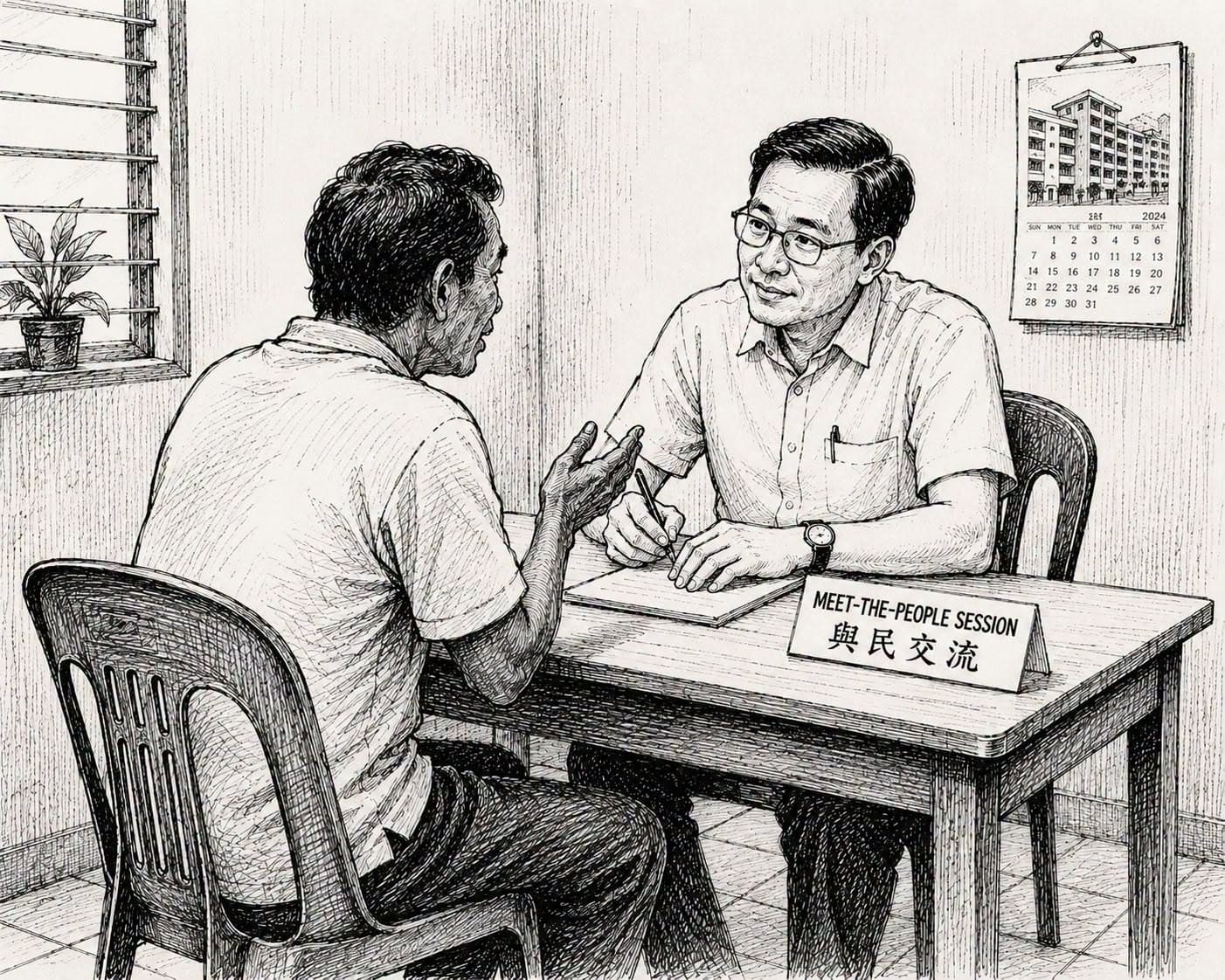
Every week across Singapore, thousands of residents queue outside community clubs, branch offices and MPs' wards.
Some need help with housing.
Many are appealing traffic fines.
Some are asking for school transfers, financial assistance or immigration matters.
Yes, this is the MPS (Meet-the-People Session). Today, it is one of the most recognisable features of Singapore politics.
𝐃𝐢𝐝 𝐲𝐨𝐮 𝐤𝐧𝐨𝐰 𝐭𝐡𝐞 𝐢𝐝𝐞𝐚 𝐝𝐢𝐝 𝐧𝐨𝐭 𝐛𝐞𝐠𝐢𝐧 𝐰𝐢𝐭𝐡 𝐭𝐡𝐞 𝐏𝐀𝐏? It started with David Marshall, who would later go on to found the Worker's Party.
Soon after taking office of the first Chief Minister in 1955, he made an unusual promise: to set aside his time for members of the public to meet him personally.
It was a novel concept: anyone could come, no appointment necessary, no complicated processes, no gatekeepers.
After the PAP won the 1959 General Election and formed the government, the practice was rolled out to every PAP branch and became a regular weekly institution.
The key figures of this initiative were the early PAP leadership, especially Lee Kuan Yew, Toh Chin Chye, and the PAP's Central Executive Committee.
The party formally introduced what it called "People's Sessions" in December 1956, while still in opposition. Initially, the sessions were held in seven PAP branches.
Held throughout party branches, they sought volunteers. Cases were documented and residents' issues were tracked.
𝐖𝐡𝐚𝐭 𝐌𝐚𝐫𝐬𝐡𝐚𝐥𝐥 𝐡𝐚𝐝 𝐩𝐢𝐨𝐧𝐞𝐞𝐫𝐞𝐝 𝐚𝐬 𝐚 𝐩𝐞𝐫𝐬𝐨𝐧𝐚𝐥 𝐩𝐫𝐚𝐜𝐭𝐢𝐜𝐞, 𝐭𝐡𝐞 𝐏𝐀𝐏 𝐬𝐜𝐚𝐥𝐞𝐝 𝐢𝐭 𝐢𝐧𝐭𝐨 𝐚𝐧 𝐢𝐧𝐬𝐭𝐢𝐭𝐮𝐭𝐢𝐨𝐧.
Even today, the MPS is a powerful and very important source of information. It put elected Members at the forefront every week to hear directly the problems and hardship that ordinary citizens faced.
Long before social media and REACH existed, MPS was nationwide feedback network. It was politics conducted face-to-face.
It was a grueling job. The sheer number of people given direct access meant that the MPS teams had to work till very late. In the days before widespread digital use, it wasn't uncommon for teams to get home only by midnight.
Post-election was when queues were strongest. Everyone thought "I vote for you, now you better do something for me."
And what is the nature of our complaints? Very, very common are traffic fine appeals. Followed by appeals to get into a primary school of choice. Appealing for BTO after an unsuccessful ballot.
Once in a while, you'd get a resident that was truly down and out. For these, there may be immediate short-term and temporary reliefs. The specifics depend on how each branch operates.
It is a good practice and I hope it continues well into the future, even with all the digital outreach and listening technology we have. It is a bridge between elected officials and the electorate.
Good ideas often outlive their creators.
David Marshall provided the spark.
The PAP built the engine.
And together, knowingly or otherwise, they created an institution that has lasted more than seventy years.