𝐓𝐡𝐞 𝐂𝐚𝐝𝐫𝐞 𝐒𝐲𝐬𝐭𝐞𝐦: 𝐘𝐞𝐬, 𝐏𝐀𝐏 𝐔𝐬𝐞𝐬 𝐈𝐭 𝐓𝐨𝐨
The recent Workers Party’s no-confidence vote raised an interesting look at the cadre system.
We brought up how it is prone to manipulation and the reflex comment is “Oh, but the PAP has it too!”
𝐖𝐡𝐚𝐭 𝐢𝐬 𝐚 𝐜𝐚𝐝𝐫𝐞 𝐬𝐲𝐬𝐭𝐞𝐦?
A cadre system creates two levels of membership.
- 𝐎𝐫𝐝𝐢𝐧𝐚𝐫𝐲 members participate in party activities, volunteer and campaign.
- 𝐂𝐚𝐝𝐫𝐞 members are specially appointed by the party leadership and are given voting rights in key internal decisions, such as electing the Central Executive Committee (CEC).
Singapore's four largest political parties — the People's Action Party (PAP), Workers' Party (WP), Singapore Democratic Party (SDP) and Progress Singapore Party (PSP) — all use some form of cadre system.
While each party has its own constitution and appointment process, the underlying principle is broadly similar: 𝑛𝑜𝑡 𝑒𝑣𝑒𝑟𝑦 𝑚𝑒𝑚𝑏𝑒𝑟 𝑎𝑢𝑡𝑜𝑚𝑎𝑡𝑖𝑐𝑎𝑙𝑙𝑦 𝑟𝑒𝑐𝑒𝑖𝑣𝑒𝑠 𝑡ℎ𝑒 𝑟𝑖𝑔ℎ𝑡 𝑡𝑜 𝑑𝑒𝑡𝑒𝑟𝑚𝑖𝑛𝑒 𝑡ℎ𝑒 𝑝𝑎𝑟𝑡𝑦'𝑠 𝑙𝑒𝑎𝑑𝑒𝑟𝑠ℎ𝑖𝑝.
𝐖𝐡𝐲 𝐡𝐚𝐯𝐞 𝐜𝐚𝐝𝐫𝐞𝐬 𝐚𝐭 𝐚𝐥𝐥?
1. To prevent hostile takeovers
Political parties are surprisingly vulnerable organisations.
Imagine a party opens membership to anyone and allows every member to vote immediately.
A rival organisation could simply encourage hundreds of supporters to join at once, pay the membership fee, and then vote out the existing leadership.
This is not merely a theoretical concern. 𝐓𝐡𝐞 𝐏𝐀𝐏 𝐡𝐚𝐬 𝐞𝐱𝐩𝐞𝐫𝐢𝐞𝐧𝐜𝐞𝐝 𝐢𝐭 𝐢𝐧 𝐭𝐡𝐞 𝐝𝐢𝐬𝐭𝐚𝐧𝐭 𝐩𝐚𝐬𝐭. 𝐀𝐬 𝐡𝐚𝐬 𝐭𝐡𝐞 𝐒𝐢𝐧𝐠𝐚𝐩𝐨𝐫𝐞 𝐃𝐞𝐦𝐨𝐜𝐫𝐚𝐭𝐢𝐜 𝐏𝐚𝐫𝐭𝐲, 𝐢𝐧 𝐭𝐡𝐞 𝐫𝐞𝐜𝐞𝐧𝐭 𝐩𝐚𝐬𝐭.
A cadre system slows this down considerably.
Only members who have demonstrated sustained commitment over time—and who are appointed as cadres—can vote in leadership elections.
𝟐. 𝐓𝐨 𝐫𝐞𝐰𝐚𝐫𝐝 𝐥𝐨𝐧𝐠-𝐭𝐞𝐫𝐦 𝐜𝐨𝐦𝐦𝐢𝐭𝐦𝐞𝐧𝐭
Political parties rely heavily on volunteers.
Many spend years walking the ground, organising events, helping residents and campaigning.
The cadre system recognises that leadership should be chosen by people who have invested substantial effort in building the organisation, rather than individuals who joined a few weeks before an election.
𝟑. 𝐓𝐨 𝐩𝐫𝐞𝐬𝐞𝐫𝐯𝐞 𝐨𝐫𝐠𝐚𝐧𝐢𝐬𝐚𝐭𝐢𝐨𝐧𝐚𝐥 𝐜𝐮𝐥𝐭𝐮𝐫𝐞
Every organisation develops its own values and operating style.
Political parties are no different.
Cadres are generally expected to understand the party's philosophy, internal processes and long-term direction before participating in leadership decisions.
Whether one agrees with the approach or not, it provides continuity.
𝐖𝐡𝐲 𝐝𝐢𝐝 𝐭𝐡𝐞 𝐏𝐀𝐏 𝐚𝐝𝐨𝐩𝐭 𝐢𝐭?
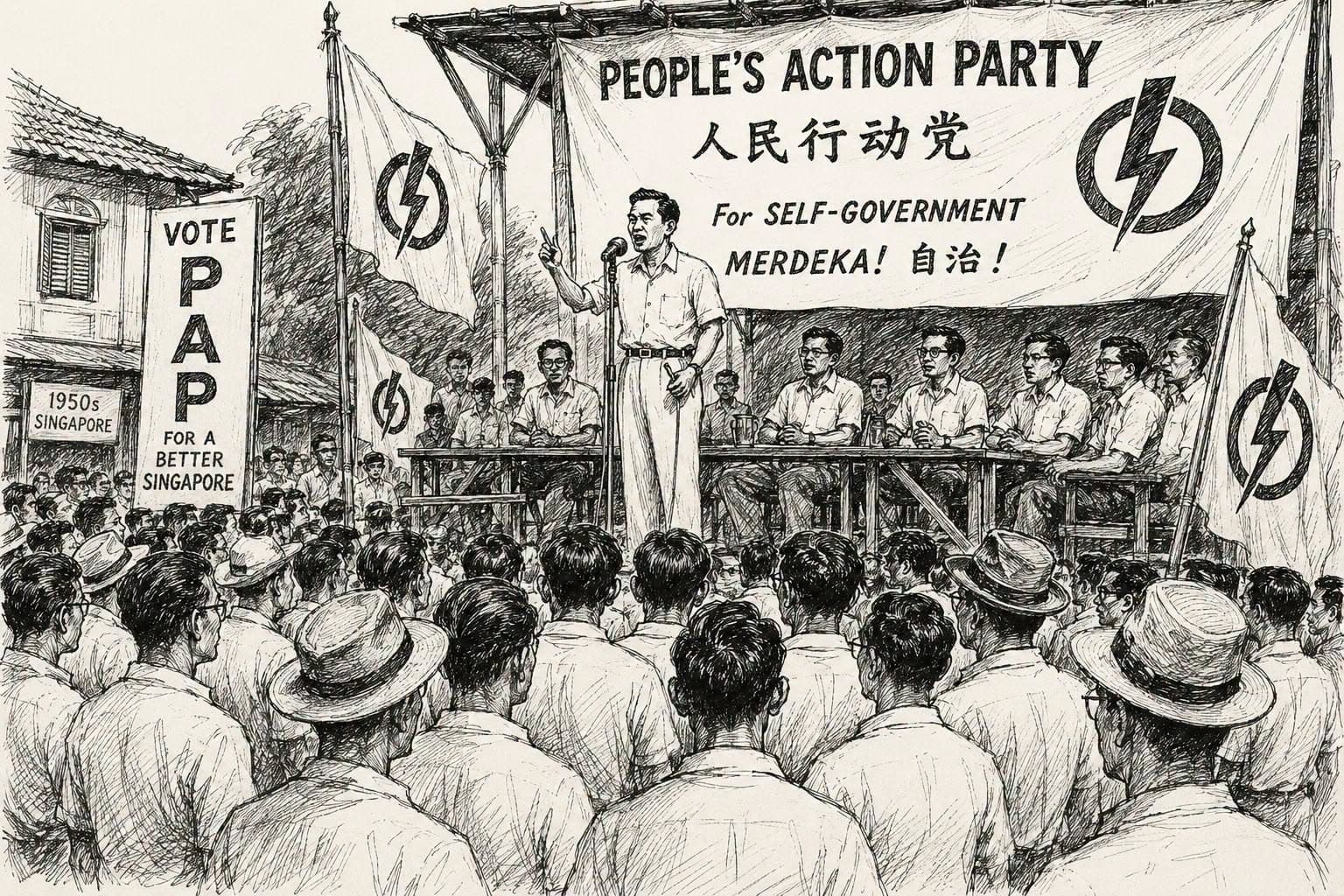
The PAP's cadre system dates back to 1957. The decade of violent and ruthless political activity.
Before then, every party member could vote in internal elections. During the PAP's early years, internal struggles between different factions nearly resulted in the party losing control of its own leadership. Following that experience, the party adopted the cadre system to reduce the risk of organised internal takeovers and to strengthen organisational stability.
The system has remained in place ever since.
𝐇𝐨𝐰𝐞𝐯𝐞𝐫, 𝐭𝐡𝐞 𝐝𝐢𝐟𝐟𝐞𝐫𝐞𝐧𝐜𝐞 𝐢𝐬 𝐧𝐨𝐭 𝐣𝐮𝐬𝐭 𝐭𝐡𝐞 𝐬𝐲𝐬𝐭𝐞𝐦, 𝐛𝐮𝐭 𝐭𝐡𝐞 𝐬𝐜𝐚𝐥𝐞
Almost every major party in Singapore has a cadre system.
What differs is 𝐡𝐨𝐰 𝐦𝐚𝐧𝐲 𝐜𝐚𝐝𝐫𝐞𝐬 𝐭𝐡𝐞𝐫𝐞 𝐚𝐫𝐞.
The PAP has historically convened thousands of cadre members*at its party conferences. Recent reports have described attendance by more than 3,000 cadres at party conferences.
By contrast, media reports and former party members have indicated that the Workers' Party's cadre membership has been much smaller—around a hundred or so in recent years.
The significance is mathematical.
If a party has 3,000 voting cadres, persuading enough people to influence an internal election requires broad support across a large pool. Not easy, almost impossible.
If a party has around 100 voting cadres, every individual vote naturally carries much greater weight.
A small voting body means it can be manipulated.
Observers will also want to pay closer attention to questions such as:
How are cadres selected?
How large is the total membership base?
How diverse is the voting base?
How representative are they of the wider membership?
These questions become more salient as the voting pool becomes smaller.
The existence of a cadre system is not unusual.
In Singapore, it is effectively the norm rather than the exception.
The more meaningful discussion is therefore not whether parties should have cadres, but how those cadres are selected, how representative they are, and whether members and the public have confidence in the process.
Ultimately, every political party faces the same balancing act.
The cadre system is one attempt to navigate that tension. Whether each party has struck the right balance is a matter for its members—and, ultimately, for voters—to judge.