Can Singaporeans Be Both Risk Averse And Entrepreneurial?
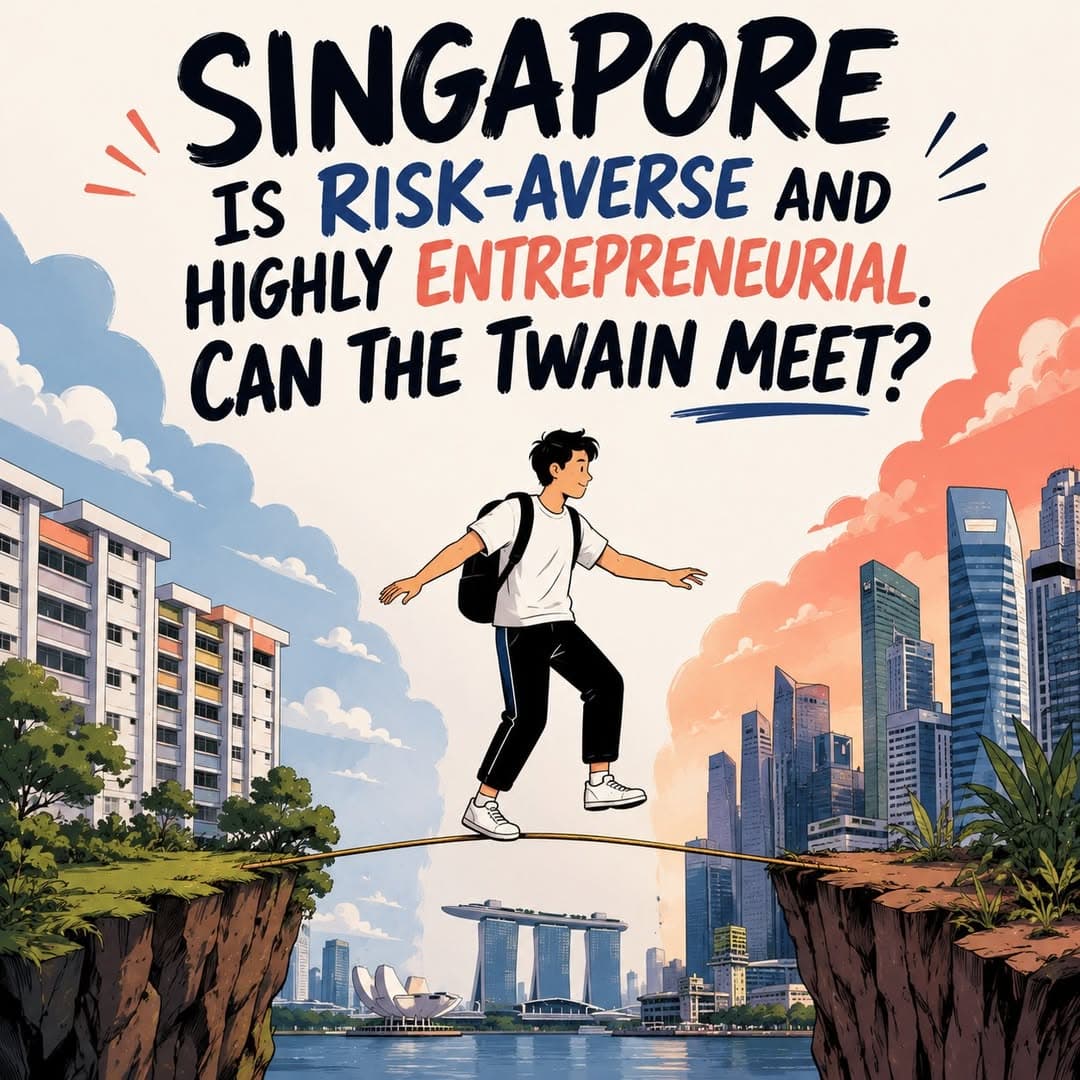
At least, that is what Singaporeans like to say about themselves.
We’re all chasing our children to go and study law, medicine and engineering. Graduates compete for scholarships.
People spend years researching a flat purchase. And if someone quits a stable job to start a business, the first remark is: “wah you very brave leh”.
Oh yes…Singaporeans hate risk. Except there is one problem: Singapore is also one of the most entrepreneurial economies in the world.
The country attracts billions of dollars in venture capital. Thousands of startups operate here. The government spends heavily on innovation. Global technology firms use Singapore as a base to enter Southeast Asia.
The nation has reinvented itself repeatedly over the last sixty years. None of that sounds particularly risk-averse.
So which is it? Well... the answer may depend on what we mean by risk.
𝐓𝐡𝐞 𝐇𝐨𝐟𝐬𝐭𝐞𝐝𝐞 𝐏𝐮𝐳𝐳𝐥𝐞
One clue comes from Dutch social psychologist Geert Hofstede.
Hofstede spent decades studying cultural differences between countries. One of his measures was something called "uncertainty avoidance" — essentially, how comfortable societies are with ambiguity and change.
Singapore scores among the lowest countries in the world. 𝐒𝐨 𝐢𝐧 𝐭𝐡𝐞𝐨𝐫𝐲, 𝐒𝐢𝐧𝐠𝐚𝐩𝐨𝐫𝐞𝐚𝐧𝐬 𝐬𝐡𝐨𝐮𝐥𝐝 𝐛𝐞 𝐫𝐞𝐦𝐚𝐫𝐤𝐚𝐛𝐥𝐲 𝐜𝐨𝐦𝐟𝐨𝐫𝐭𝐚𝐛𝐥𝐞 𝐰𝐢𝐭𝐡 𝐮𝐧𝐜𝐞𝐫𝐭𝐚𝐢𝐧𝐭𝐲.
Lol…you must probably laughing already. Comfortable with uncertainty? Have you met my parents?
But Hofstede was not measuring whether people enjoy gambling, speculative investments or quitting their jobs to become influencers.
He's asking: can people adapt when circumstances change? And on that measure, Singapore performs remarkably well.
The country has transformed itself repeatedly already. From trading port to manufacturing hub. From manufacturing hub to financial centre. From financial centre to technology and innovation hub.
Each transition required enormous adaptation.
So yeah, Singaporeans may not like uncertainty. But we are unusually capable of dealing with it.
𝐓𝐡𝐞 𝐃𝐢𝐟𝐟𝐞𝐫𝐞𝐧𝐜𝐞 𝐁𝐞𝐭𝐰𝐞𝐞𝐧 𝐑𝐢𝐬𝐤 𝐚𝐧𝐝 𝐃𝐨𝐰𝐧𝐬𝐢𝐝𝐞
Imagine two people: One walks into a casino and puts their life savings on a single roulette spin.
The other spends six months researching an investment, modelling scenarios and understanding the downside before committing capital.
Both take risks. Only one behaves recklessly.
Singapore has spent decades teaching citizens to become the second person.
At a national level, Singapore often takes surprisingly bold bets.
The government invested heavily in container shipping before it was obvious. Then semiconductors. Then aviation. Then financial services. Then biomedical sciences. And now artificial intelligence.
For a small island with no natural resources, that is an extraordinary sequence of strategic gambles.
Yet individual Singaporeans often remain cautious.
The country behaves like a venture capitalist, and the people behave like accountants.
𝐒𝐨 𝐈𝐬 𝐈𝐭 𝐏𝐨𝐬𝐬𝐢𝐛𝐥𝐞 𝐓𝐨 𝐁𝐞 𝐁𝐨𝐭𝐡 𝐑𝐢𝐬𝐤 𝐀𝐯𝐞𝐫𝐬𝐞 𝐀𝐧𝐝 𝐄𝐧𝐭𝐫𝐞𝐩𝐫𝐞𝐮𝐧𝐚𝐥?
Singapore is not torn between risk aversion and entrepreneurship. I’d say the two are becoming increasingly compatible.
𝐓𝐡𝐞 𝐬𝐭𝐞𝐫𝐞𝐨𝐭𝐲𝐩𝐞 𝐢𝐦𝐚𝐠𝐢𝐧𝐞𝐬 𝐞𝐧𝐭𝐫𝐞𝐩𝐫𝐞𝐧𝐞𝐮𝐫𝐬 𝐚𝐬 𝐫𝐞𝐜𝐤𝐥𝐞𝐬𝐬 𝐠𝐚𝐦𝐛𝐥𝐞𝐫𝐬, 𝐛𝐮𝐭 𝐦𝐨𝐝𝐞𝐫𝐧 𝐞𝐧𝐭𝐫𝐞𝐩𝐫𝐞𝐧𝐞𝐮𝐫𝐬𝐡𝐢𝐩 𝐨𝐟𝐭𝐞𝐧 𝐥𝐨𝐨𝐤𝐬 𝐝𝐢𝐟𝐟𝐞𝐫𝐞𝐧𝐭.
It involves gathering information, running experiments, testing assumptions and managing downside. In other words - this is us! We’re risk managed and that’s what makes us successful.
Singapore's future entrepreneurs may not look like Silicon Valley cowboys. We’ll just be very kiasi Singaporeans. We’ll build the spreadsheets before building companies.
It’s not glamorous, and the businesses we run are probably not the exciting Y-Combinator sort…but then again, Singapore was never built by gamblers.
It was built by people who knew exactly which risks were worth taking.